

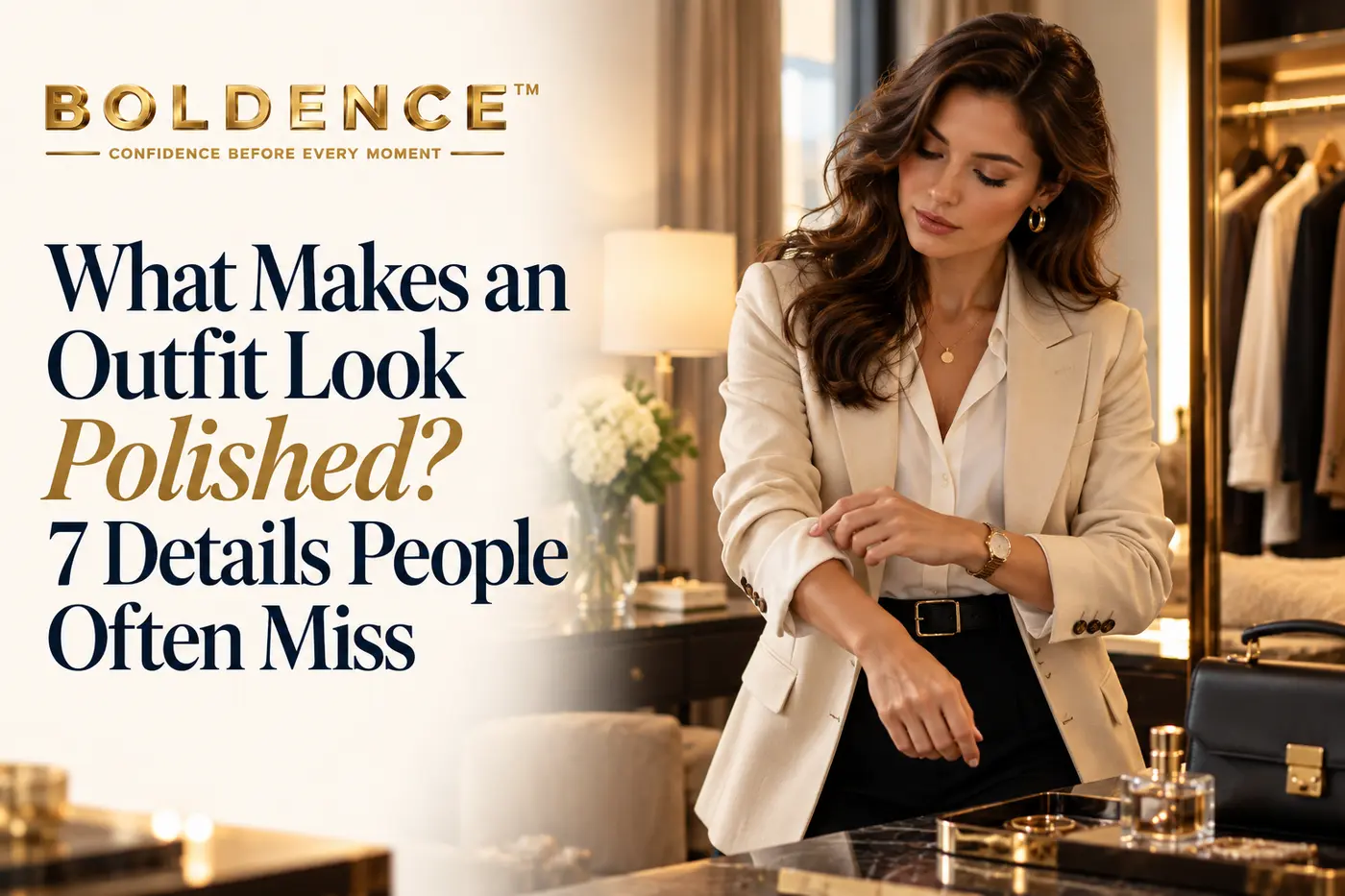
Two people can wear nearly the same outfit, a navy sweater, gray trousers, and leather shoes, and one of them looks noticeably more put together. It’s rarely about price or brand. It’s usually a handful of small details that most people don’t think to check.
If you’ve ever wondered how to look polished without overhauling your wardrobe, the answer is mostly in those details. Here are seven that make a real difference, plus a quick checklist you can run before you head out the door.
What Does It Mean for an Outfit to Look Polished?
A polished outfit looks intentional, well cared for, and coordinated from head to toe. The clothes fit properly, the fabric is in good condition, the colors work together, and nothing distracts from the overall look. Polish isn’t the same as formality. A T-shirt and jeans can look polished, and a suit can look sloppy.
Think of polish as the difference between clothes you put on and an outfit you put together.
1. Fit at the Shoulders, Sleeves, and Hems
Fit is the foundation of a polished look, and it’s where many outfits quietly fall apart. Well-fitting clothes don’t have to be tight. They have to sit where they’re designed to sit.
A few places to check:
- Shoulders: The shoulder seam of a shirt, jacket, or sweater should land at or near the edge of your shoulder, not halfway down your arm or pulling inward.
- Sleeves: Jacket sleeves typically end around the wrist bone, with a bit of shirt cuff showing if you’re wearing one.
- Trouser hems: Pants that pool heavily at the ankle or end awkwardly above it can make the whole outfit look off.
- Waist: No gaping at the back of the waistband, and no pulling across the front.
The good news is that a local tailor can fix many of these issues for less than the cost of a new garment. Hemming trousers and shortening sleeves are among the most common and affordable alterations.
2. The Condition of the Fabric
Small signs of wear add up fast. Wrinkles, pilling on knits, lint on dark fabrics, faded black clothing, stretched-out collars, and loose threads all chip away at an otherwise good outfit.
A few simple clothing care habits go a long way:
- Keep a handheld steamer or iron for quick touch-ups
- Use a lint roller on dark clothing before leaving
- Remove pills from sweaters with a fabric shaver
- Wash dark clothing inside out in cold water to help slow fading
- Hang structured pieces, like blazers and dress shirts, rather than folding them
These habits take minutes but make clothes look newer for longer.
3. Shoes That Match the Outfit, and Are Cared For
Footwear is one of the most overlooked outfit details, and one of the most noticed. Shoes can raise or lower the formality of an entire look, and their condition says a lot.
Ask two questions about your shoes:
- Footwear influences the overall impression and practicality of a look. Combining tailored clothing with sneakers can be a deliberate styling choice. Check whether the contrast makes sense for your style, the occasion, and the movement required.
- Are they in good condition? Scuffed toes, worn heels, dirty laces, and creased white sneakers can undercut everything else you’re wearing.
A quick wipe, a little polish, or new laces can make a familiar pair look fresh again.
4. Color Harmony Across the Whole Outfit
Polished outfits tend to have a clear color story. That doesn’t mean everything has to match; it means the colors look like they belong together.
Watch for:
- Mismatched neutrals: two slightly different blacks or navies next to each other can look accidental
- Too many competing colors: three or four strong colors at once can feel busy
- Shoes, belt, and bag: these small items should work with the palette, even if they don’t match exactly
A limited palette is one convenient way to coordinate an outfit, but it is not the definition of looking polished. Multiple colors, prints, or bold contrasts can be equally intentional. Look for relationships among colors and choose a combination that suits your style and the occasion.
5. Proportion and Balance
Proportion describes how an outfit’s shapes and volumes relate. Loose layers with wide trousers, closely fitted pieces, and mixed silhouettes can all look intentional. Rather than labeling one combination sloppy or balanced by default, consider how the overall shape serves the look you want.
Small adjustments can change proportion dramatically:
- Tucking a shirt, fully or just at the front
- Cuffing or rolling sleeves
- Adding or removing a layer
- Choosing shoes with more or less visual weight
If something feels off but you can’t pinpoint it, proportion is often the culprit.
6. Accessories That Are Edited
Accessories can be understated or expressive. A watch, belt, bag, jewelry, glasses, scarf, and statement shoes can work together when their combination feels intentional for your style and the setting.
If you prefer a simpler look, you might highlight one accessory. If expressive jewelry, bold shoes, or several statement pieces are part of your personal style, those choices can work too. Check practical details, including whether bags, belts, and accessories are comfortable and in good repair.
7. Grooming and Finishing Touches
Personal presentation includes more than clothes. Grooming and finishing details complete the picture:
- Hair and grooming are personal, cultural, and expressive choices. Focus on the level of care and presentation that feels right for you and the setting, without treating any particular hair texture, grooming routine, or gender expression as the standard.
- Clean, trimmed nails
- Collars lying flat and buttons fully fastened where they should be
- No visible tags, loose threads, or dry-cleaning stickers
- Undergarments that don’t show through or shift the line of the clothes
- A light hand with fragrance
None of these take long, but missing one can be surprisingly noticeable, especially in close settings like interviews, meetings, and dates.
A Five-Minute Polish Check Before You Leave
Before an important day, stand in front of a full-length mirror or take a full-body photo and run through this list:
- Do the shoulders, sleeves, and hems fit properly?
- Is anything wrinkled, pilled, faded, or covered in lint?
- Are my shoes clean and right for the formality of the outfit?
- Do the colors work together, including shoes, belt, and bag?
- Do the proportions look balanced?
- Do the accessories work together in a way that feels intentional for your style and the occasion?
- Are grooming and finishing details taken care of?
A photo is especially helpful because it shows the full look at once, the way other people will see it. For a structured second perspective on that photo, BOLDENCE reviews these kinds of visible details, including fit and silhouette, color harmony, polish and finish, and styling balance, then shows you what’s working and where a focused refinement might help. You can see how BOLDENCE reviews the complete look on its How It Works page.
Does Looking Polished Mean Dressing Up?
No. Learning how to look professional and how to look put together often overlap, but polish applies at every level of formality. A clean pair of jeans, a well-fitting tee, a structured jacket, and cared-for sneakers can be very polished. The details above work just as well on a weekend outfit as on a suit.
Polish also isn’t about spending more. A well-maintained, well-fitting outfit from a budget retailer will often look more refined than an expensive piece that’s wrinkled or doesn’t fit.
Common Questions About Looking Polished
What’s the fastest way to look more polished?
Check fit and fabric condition first. Steaming wrinkles and wiping down your shoes can make a visible difference in a few minutes.
Do I need to buy new clothes to look polished?
Usually not. Tailoring, care, and better combinations of what you already own make a bigger difference than most new purchases.
How do I look polished but still comfortable?
Choose well-fitting pieces in fabrics with some give, and shoes you’ve already broken in. Comfort and polish work together when clothes fit properly.
Small Details, Big Difference
Learning how to look polished is mostly a matter of noticing. Fit, fabric condition, shoes, color, proportion, accessories, and grooming are all small on their own, but together they shape how an outfit comes across. Fix one or two, and the clothes you already own can feel far more intentional.
BOLDENCE brings personal appearance and practical preparation together for the Moments that matter. BOLDENCE is currently in pre-launch. Join the BOLDENCE waitlist for early access.