

The invitation is on the fridge. It’s printed on heavy cardstock, the ceremony starts at 6 p.m., and in small type at the bottom it says “formal attire.” You know that means “dress up.” What you don’t know is exactly how far.
Figuring out what to wear to a formal wedding is less about finding the most impressive outfit and more about matching what the couple asked for. Once you understand the dress code and the clues around it, the options narrow quickly, and the second-guessing tends to fade.
What Does “Formal” Mean on a Wedding Invitation?
In the U.S., the labels “formal” and “black-tie optional” often overlap, but different couples may use them differently. Read the invitation and wedding website first, and ask the hosts if you need clarification. Depending on their guidance, formal attire might include a dark suit, an evening dress, a dressy jumpsuit, or elegant separates.
- Suits: a dark, well-tailored suit with a dress shirt, tie, and polished dress shoes. A tuxedo is welcome but not required.
- Dresses: a floor-length gown, an elegant midi dress, or a dressy cocktail dress in a refined fabric.
- Other options: a dressy jumpsuit or elegant separates, styled with formal shoes and accessories.
The common thread is polish. Formal wedding attire should look intentional, refined, and clearly dressier than what you’d wear to the office or a casual party.
Wedding Dress Codes, From Most to Least Formal
It helps to see where “formal” falls among other common wedding guest dress codes:
- White tie: The most formal. Tailcoats, white bow ties, and full-length evening gowns. Rare at modern weddings.
- Black tie: Tuxedos and floor-length gowns are the norm. Very elegant cocktail dresses can work in some circles, but long is the safer choice.
- Black tie optional / formal: Tuxedos or dark suits; gowns, formal midi dresses, or dressy cocktail dresses.
- Cocktail / semi-formal: Suits (ties optional in some settings), cocktail dresses, dressy separates.
- Dressy casual or casual: Lighter suits or blazers without ties, sundresses, and polished separates, depending on the setting.
If the invitation uses wording you don’t recognize, like “festive attire” or “garden formal,” check the couple’s wedding website. Many couples explain what they mean there.
Read the Rest of the Invitation, Too
The dress code is your primary guide, but the details around it fill in the picture.
Time of day
An evening ceremony is usually more formal than a daytime one. If you’re figuring out what to wear to an evening wedding with a formal dress code, darker colors, richer fabrics, and longer hemlines tend to fit naturally. Daytime formal weddings often allow lighter colors and fabrics.
Venue
A hotel ballroom, historic estate, or downtown event space suggests a polished, traditional approach. A vineyard, garden, or beach venue may still be formal, but your shoe and fabric choices matter more. Stilettos sink into grass, and heavy wool is uncomfortable outdoors in July.
Season and location
A formal wedding in Chicago in January calls for different fabrics and outerwear than one in Miami in June. Check the forecast a few days out and plan layers if the ceremony or photos are outdoors.
The couple and their community
Some families and cultural traditions have their own expectations, including colors to wear or avoid. If you’re unsure, ask the couple or someone in the wedding party. It’s a thoughtful question, not an awkward one.
Formal Wedding Guest Outfit Options
Suits and tuxedos
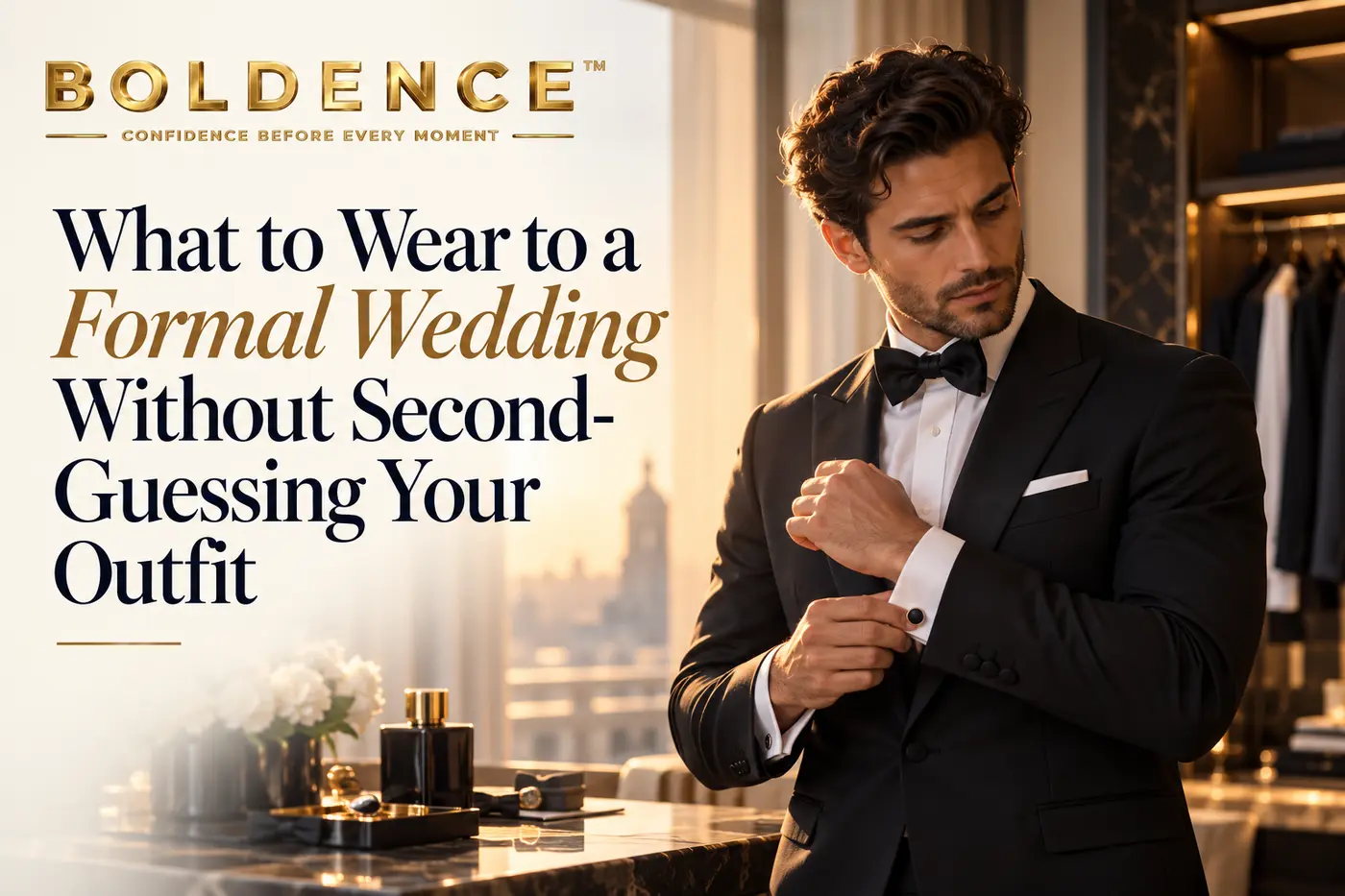
For a formal or black tie optional wedding, a dark suit in navy, charcoal, or black is the dependable choice. Pair it with a crisp dress shirt, a silk tie, and polished leather dress shoes. If you own a tuxedo and the invitation says black tie optional, this is a good time to wear it. Fit matters more than price here. A suit that’s been tailored at the sleeves and hem looks more formal than an expensive one that doesn’t fit.
Gowns and dresses
Floor-length gowns are generally appropriate at formal weddings, especially in the evening. Elegant midi dresses and refined cocktail dresses can also work, particularly for “formal” rather than strict “black tie.” Fabrics like satin, crepe, chiffon, and velvet help a dress read as formal.
Jumpsuits and elegant separates
A tailored jumpsuit in a luxe fabric or a dressy top with wide-leg trousers or a long skirt can be just as appropriate as a gown. Formal shoes, a structured bag, and thoughtful jewelry keep the look in the right range.
Color, Fabric, and the Mood of the Day
Rich tones like navy, emerald, burgundy, plum, deep blue, and black are classic choices for formal evening weddings. Jewel tones and darker shades feel celebratory and elegant without competing with the wedding party. For daytime formal weddings, softer colors like dusty blue, sage, or blush work well.
Black has become widely accepted at formal and evening weddings in the U.S., though some traditions still avoid it. If you’re unsure, add color through an accessory or choose deep navy instead.
What Not to Wear to a Wedding With a Formal Dress Code
A few choices tend to cause trouble at formal weddings:
- White, ivory, or anything that could be mistaken for bridal wear, unless the couple has specifically asked guests to wear it
- Casual fabrics and pieces, like denim, cotton jersey, or sneakers
- Clothing that requires constant adjusting, especially if you’ll be sitting through a ceremony and dancing later
- Brand-new, untested shoes, which can make a long evening very uncomfortable
- Anything that matches the wedding party’s colors too closely, if those colors have been shared
Details That Finish a Formal Look
Formal wedding guest attire gets judged as a whole, so small details carry a lot of weight:
- Shoes: Clean, polished, and comfortable enough for standing at cocktail hour and dancing at the reception.
- Outerwear: Prioritize the weather, travel, and your comfort. If it is practical, you can choose a coat or jacket that works with the occasion, but staying warm and dry matters more than matching a formal outfit perfectly.
- Bag and accessories: A small clutch or structured bag, simple cufflinks, a pocket square, or jewelry that complements rather than competes.
- Tailoring and condition: Pressed fabric, the right hem length for your shoes, and no loose threads or missing buttons.
- Grooming: Choose hair and finishing touches that reflect your personal or cultural style, suit the occasion, and feel comfortable to you. No single hair texture or grooming convention is the standard.
How to Stop Second-Guessing Your Outfit
Most outfit doubt comes from making the decision too late or never seeing the full look together. A simple routine helps:
- Do a full try-on at least a week before. Wear the outfit with the exact shoes, accessories, and outerwear you plan to bring.
- Move in it. Sit, walk, reach, and dance for a minute. You’ll be doing all of these.
- Take a full-length photo in good light. It’s easier to judge proportions and color from a photo than from a mirror.
- Compare it to the invitation one more time. Does it match the dress code, time, and venue?
- Fix one thing, not everything. A different shoe or a simpler accessory usually solves more than a full outfit change.
If you’d like a second perspective at step three, BOLDENCE is designed for exactly this. You prepare for the Wedding Guest Moment by adding a clear, full-body photo of the look you plan to wear, then review guidance on fit, color harmony, polish, styling, and how the complete look aligns with a wedding setting. The invitation and event details remain your primary context, and your own judgment makes the final call.
Common Questions About Formal Wedding Attire
Can I wear a short dress to a formal wedding?
For “formal” or “black tie optional,” an elegant knee-length or midi cocktail dress in a refined fabric can work. For strict “black tie,” a floor-length gown is the safer choice.
Do I need a tuxedo for a black tie optional wedding?
No. A well-fitted dark suit with a tie is appropriate. A tuxedo is welcome if you have one.
Can I wear black to a formal wedding?
In most U.S. weddings, yes, especially in the evening. If you know the couple’s family or tradition avoids black, choose navy or a deep jewel tone instead.
Dress for the Couple’s Day, Then Enjoy It
Choosing what to wear to a formal wedding gets much easier once you read the invitation closely, understand where “formal” sits among wedding dress codes, and test the full outfit ahead of time. Aim for polish, comfort, and respect for the couple’s request, and you’ll be able to put your phone away and enjoy the celebration.
See BOLDENCE guidance for wedding guests. BOLDENCE is currently in pre-launch. Join the BOLDENCE waitlist for early access.