
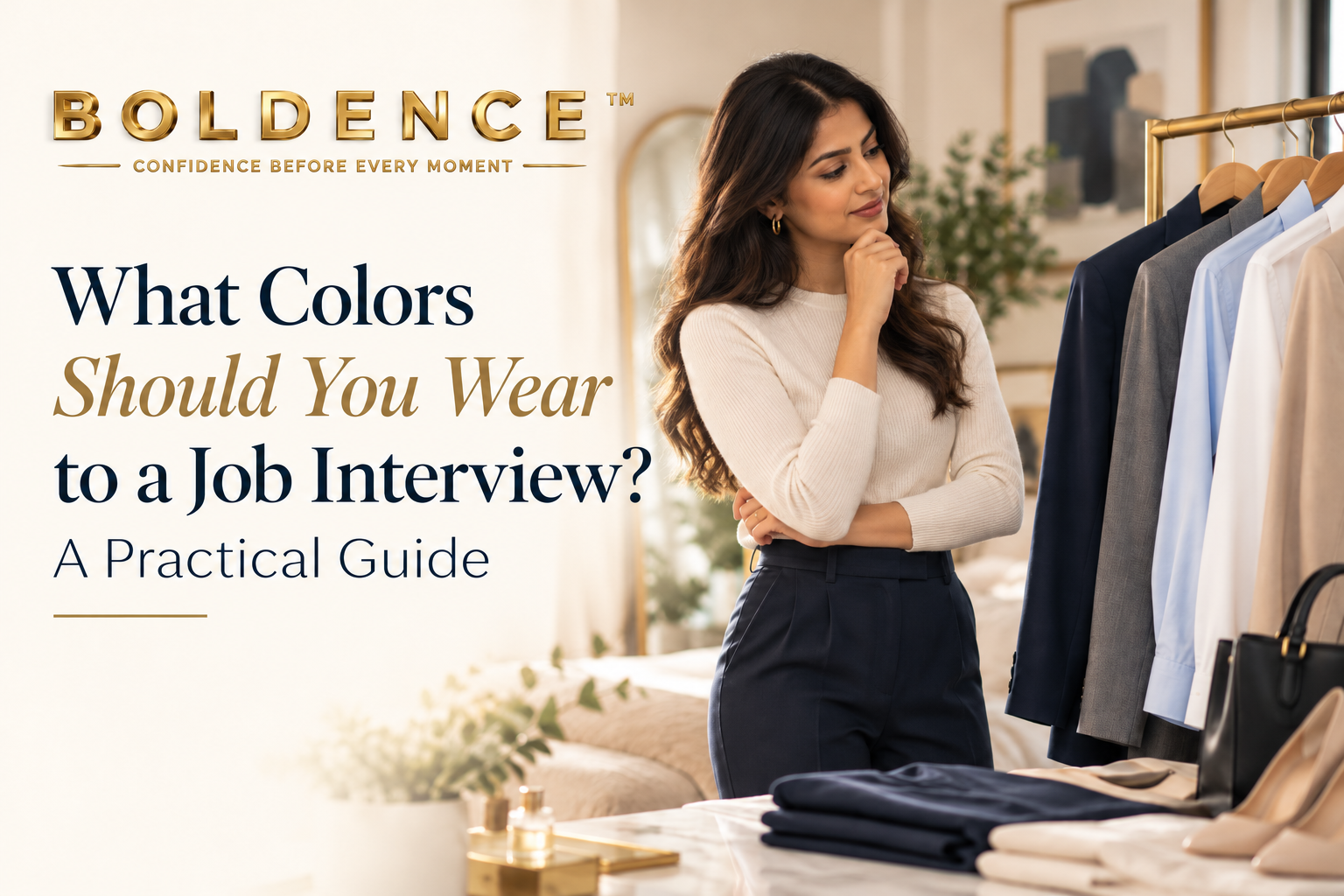
You have the interview on the calendar, you’ve researched the company, and you’ve practiced your answer to “tell me about yourself.” Then you open the closet and stall. Navy blazer or the gray one? Is a burgundy sweater too much? Does an all-black outfit look sharp or severe?
Figuring out what colors to wear to an interview feels like a small decision, but it’s one of those details that can nag at you right up until you walk out the door. The good news is that there’s no secret color formula. There are a few dependable choices, a handful of colors that need more thought, and one principle that matters more than any single shade: the colors in your outfit should work together and suit the setting you’re walking into.
The Short Answer: What Colors Work Best for an Interview?
For many U.S. interviews, useful low-risk starting points include navy, charcoal, gray, black, white, light blue, and some earth tones. These colors can be easy to combine across many workplaces, but they are options, not a required palette. The employer’s context and your own style matter more than any prescribed shade.
That said, “safe” doesn’t mean “required.” A muted green, a deep burgundy, or a soft blush can work well as an accent, especially in creative or casual workplaces. The goal is a look where the interviewer remembers your answers, not the color of your shirt.
Why Color Is Really About Cohesion
People often treat interview outfit colors as a question of symbolism: blue means trustworthy, red means bold, and so on. You’ll see plenty of those claims online, but in practice the bigger issue is simpler. Do the colors in your full outfit look like they belong together?
A navy suit with a crisp white shirt and brown shoes reads as intentional. The same navy suit with a slightly different navy shirt, black shoes, and a bright patterned tie may feel a little off, even if each piece is fine on its own. That’s what color harmony means in everyday terms: how your clothing, shoes, and accessories interact as one palette rather than as separate items.
When you think about color this way, the question shifts from “Is gray a good interview color?” to “Does this combination look calm, coordinated, and right for this employer?”
The Best Colors for a Job Interview, Shade by Shade
Navy
Navy is probably the most versatile interview color there is. It looks polished without feeling as stark as black, it pairs with almost any shirt or blouse color, and it works with both brown and black shoes. If you own one interview-ready jacket or suit, navy is a smart one to have.
Charcoal and Medium Gray
Charcoal is a close second to navy. It’s formal enough for conservative industries but softer than black. Medium and light grays feel a little more relaxed and can be a good fit for business casual interviews. One practical note: light gray shirts and tops tend to show perspiration, so if you run warm when you’re nervous, choose a darker shade or a different fabric.
Black
Black is not off-limits, despite what some older advice suggests. A well-fitting black suit, dress, or pair of trousers can look sharp, especially in fashion, creative, or evening-adjacent industries. The risk is that head-to-toe black can feel heavy or more formal than the setting calls for. Breaking it up with a white or light-colored top usually solves that.
White, Ivory, and Light Blue
White, ivory, and light blue are versatile shirt and blouse options because they can create clear contrast with other pieces. The effect varies with skin tone, fabric, lighting, and the colors around them. Check the garment’s condition and choose the shade that works for your full look.
Earth Tones
Camel, tan, olive, chocolate brown, and taupe are good options when you want something warmer than the usual navy-and-gray palette. They tend to suit business casual and creative interviews especially well. A camel sweater over a white shirt with dark trousers can look just as considered as a suit in the right workplace.
Can You Wear Color to an Interview?
Yes. The question is how much and where.
A useful approach is to keep your larger pieces neutral and let color appear in a smaller, controlled way: a blouse, a tie, a knit, a scarf, or a pair of shoes. Deep jewel tones like burgundy, emerald, plum, and sapphire often work well because they feel rich rather than loud.
Workplace context matters here. A bright cobalt top might be perfect for an interview at a design studio and feel out of step at a conservative financial firm. If you’re unsure, look at the company’s website, LinkedIn photos of current employees, or any guidance the recruiter has shared. Those real-world signals tell you more than any general rule.
Colors to Avoid for a Job Interview
No color is automatically disqualifying, but some create more risk than they’re worth:
- Neon and very saturated brights. Electric orange or highlighter yellow can pull attention away from the conversation.
- Head-to-toe bold color. A red suit can work for the right person in the right industry, but it’s a statement. Make sure it’s the statement you want.
- Busy prints and tight patterns. Small checks, narrow stripes, and loud florals can feel distracting in person and can shimmer or blur on camera.
- Clashing undertones. A navy jacket plus a different navy pant, or two blacks that don’t quite match, can look accidental.
- Light colors that show wear. Pale fabrics highlight wrinkles, stains, and perspiration more than darker ones.
If a color makes you second-guess the whole outfit, that’s usually a sign to swap it for something you won’t think about once the interview starts.
Do Interview Colors Change for Video Interviews?
A little. Cameras handle color differently than the human eye. A few practical adjustments help:
- Solid colors usually look best on screen. Fine stripes, small checks, and herringbone can create a flickering effect on camera.
- Very bright white can look washed out under strong lighting. Off-white, ivory, or light blue tends to read better.
- Think about your background. If you’re sitting against a white wall, a white top may blend in. A mid-tone or darker color gives you contrast.
- Check the full frame. Your interviewer sees your top half, so make sure the color around your face, neckline, and shoulders looks good on a test call.
How to Choose Your Interview Outfit Colors Before the Day
Instead of deciding what colors to wear to an interview in a rush the morning of, give yourself a short check a day or two ahead:
- Start with the setting. Is it a corporate office, a startup, a retail floor, or a video call? Let that set your level of formality.
- Pick one anchor color. Usually this is your jacket, suit, dress, or trousers: navy, charcoal, gray, black, or an earth tone.
- Add one supporting color. A shirt, blouse, or knit that contrasts cleanly with the anchor.
- Decide whether you want an accent. If so, keep it to one area, like a tie, a scarf, or shoes.
- Look at shoes, belt, and bag together. These small pieces often decide whether a look feels coordinated.
- Check it in natural light. Navy and black can be hard to tell apart indoors, and colors can shift between lighting conditions.
- Take a full-length photo. Seeing the whole outfit at once makes it easier to spot what isn’t working.
That last step is where a second perspective helps. BOLDENCE is built around this kind of preparation. You choose the Job Interview Moment, add a clear, full-body photo of the look you plan to wear, and review guidance on visible details like color harmony, fit, polish, and footwear. You see what’s already working and where a focused refinement might help, while your own judgment still makes the final call.
Quick Answers to Common Interview Color Questions
Is black too harsh for a job interview?
Not usually. Black can look polished and modern. If it feels heavy, pair it with a lighter top or add warmth through a texture or accessory.
Should I wear the company’s brand colors?
It isn’t necessary, and it can come across as trying too hard if it’s obvious. A subtle nod is fine, but focus first on what looks good on you and suits the setting.
What color shoes should I wear to an interview?
Black, dark brown, tan, navy, or nude-toned shoes work with most interview attire. Match the formality of your outfit and make sure they’re clean and in good repair.
What’s the safest color combination if I’m completely unsure?
A navy or charcoal base with a white or light blue top and simple dark shoes. It fits nearly any job interview outfit expectation without much risk.
Choose the Colors, Then Focus on the Conversation
The right interview colors are the ones that look coordinated, suit the employer, and let you stop thinking about your clothes once you sit down. Start with a reliable neutral, add color with intention, check the full look together, and use any dress code guidance you’ve been given as your strongest signal.
For another perspective on the outfit you are planning, explore BOLDENCE’s context-aware guidance. BOLDENCE is currently in pre-launch. Join the BOLDENCE waitlist for early access.