

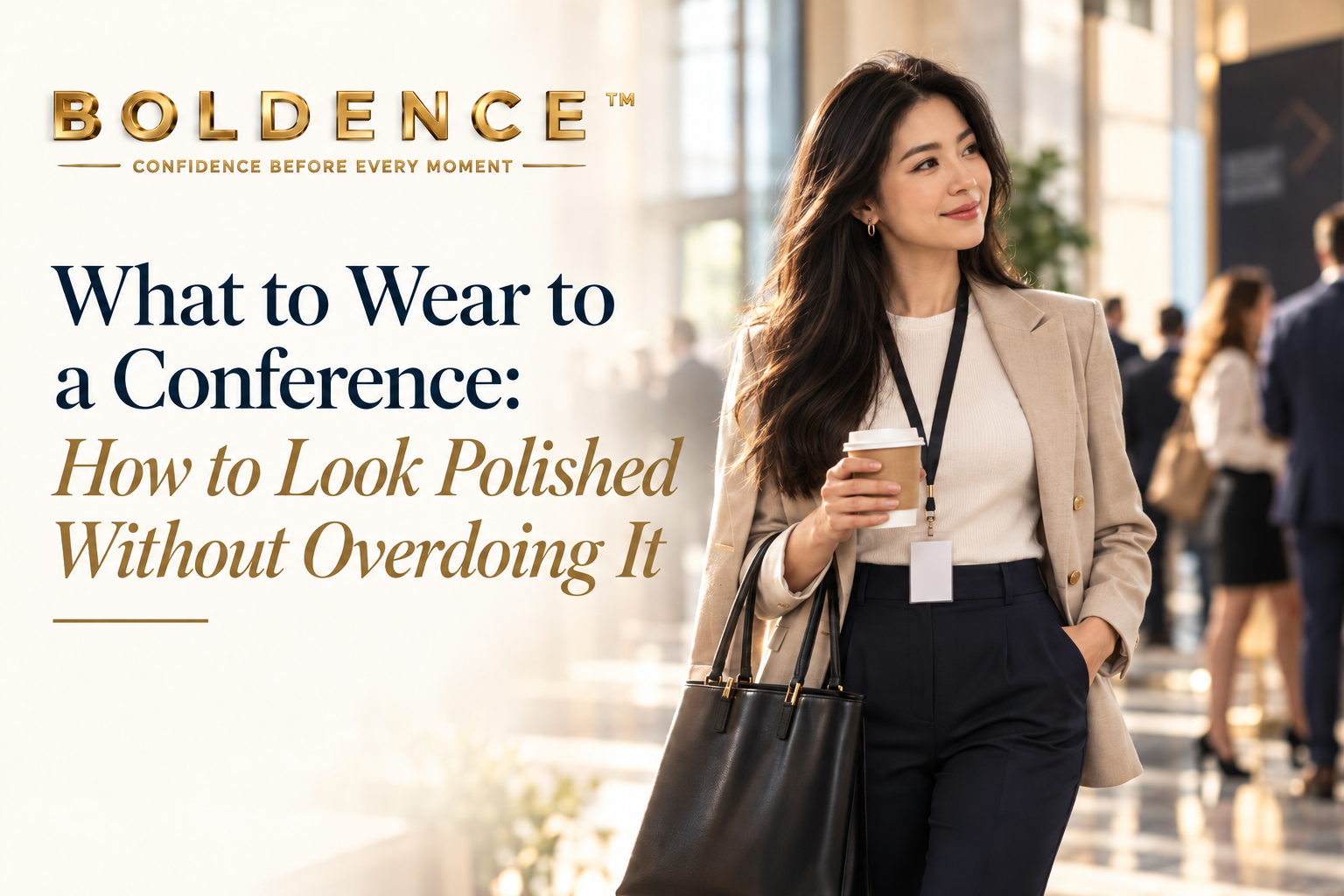
A conference day rarely looks like a normal workday. You might start with an 8 a.m. keynote in an over-air-conditioned ballroom, walk the expo hall for two hours, eat lunch standing up, sit through three breakout sessions, and finish at an evening reception on a hotel rooftop. Your clothes have to handle all of it, and you’re meeting new people the entire time.
That’s why figuring out what to wear to a conference can feel trickier than dressing for the office. You want to look polished and credible, but you also need to stay comfortable for ten or twelve hours. The right conference outfit lives in the space between those two goals.
What Is the Typical Conference Dress Code?
Many professional conferences fall somewhere around business casual, but norms differ across industries, cities, organizers, and sessions. Let the event’s own guidance lead. Depending on the setting, options might include trousers or chinos, knitwear, button-down shirts, a blazer, a dress, and footwear that lets you move comfortably.
The real range depends heavily on the industry and the event:
- Tech and startup conferences often lean smart casual. Dark jeans, clean sneakers, and a nice layer are common.
- Finance, legal, and government events usually lean more formal, with more suits and blazers in the crowd.
- Medical, academic, and scientific conferences vary widely, but business casual is a safe middle.
- Creative and marketing events tend to allow more color, texture, and personal style.
If you’re unsure, check the event website for any stated dress code, look at photos from last year’s event, and scroll the event hashtag on social media. If you’re attending with your company, ask a colleague who has gone before. Those clues will tell you far more than a general rule.
Why Conference Attire Has to Work Harder Than Office Clothes
Conference attire carries a few demands that a regular day at your desk doesn’t:
- You’ll walk more than you expect. Large convention centers can mean miles of walking between sessions and the expo floor.
- Room temperatures swing. Session rooms are often cold, hallways can be warm, and outdoor transitions vary by city and season.
- You’re making first impressions all day. Every coffee line and hallway conversation is a potential introduction.
- There’s no going home to change. What you put on in the morning may need to carry you through an evening event.
Keeping those in mind helps you choose clothes for the day you’ll actually have, not just the first ten minutes.
How to Build a Polished Conference Outfit
Start with comfortable shoes for a conference
Footwear is where conference outfits most often go wrong. Brand-new dress shoes or a pair you rarely wear can turn painful by midafternoon. Choose shoes you’ve already broken in: leather loafers, low block heels, supportive flats, polished low boots, or clean minimal sneakers if the crowd is more casual. Make sure they’re in good condition, too. Scuffed toes and worn heels show up more than people realize.
Plan for layers
A light blazer, cardigan, or overshirt is the most useful piece you can bring. It adds polish for a morning panel, keeps you warm in a cold session room, and comes off easily when you’re walking the expo floor. Choose a layer that looks good both on and off, so the outfit underneath still holds up when the jacket is draped over your arm.
Choose fabrics that hold up
Long days are hard on clothes. Fabrics with a little stretch, knits, and blends that resist wrinkling tend to look better at 5 p.m. than crisp cotton that creases the moment you sit down. If you’re flying in, pack pieces that recover well from a suitcase or can be steamed quickly in a hotel bathroom.
Pick a bag that fits the day
You may carry a laptop or tablet, charger, water bottle, and materials collected during the event. Choose a bag with enough space, a comfortable way to carry it, and a condition and style that suit your plans. A colorful tote, practical backpack, or structured bag can all work.
How to Look Polished Without Overdoing It
Looking polished at a conference is mostly about cohesion, not formality. A few signs that a look may be tipping into “too much”:
- It’s noticeably more formal than the room. A full three-piece suit at a casual tech conference can make you feel out of place.
- Several pieces are competing for attention. A bold print, statement shoes, and a big necklace all at once can pull focus.
- It’s built around something you haven’t tested. A new outfit or new shoes add risk on a day when you don’t have time to fix things.
On the other hand, polish often comes from small details: clothes that fit well across the shoulders and at the hem, colors that coordinate, shoes that are clean, and a layer that frames the look. If you want a closer look at those details, the BOLDENCE How It Works page explains the visible signals it reviews, from fit and silhouette to polish and finish.
What to Wear to a Conference as a Speaker
If you’re presenting, your outfit has a few extra jobs. You’ll be on stage, possibly on a big screen, and likely wearing a microphone.
- Plan for the mic. Lavalier microphones usually clip to a lapel, collar, or neckline, with a transmitter pack at your waistband or pocket. A jacket, collared shirt, or top with structure, plus a belt or waistband, makes this much easier.
- Choose solid colors. Very fine stripes and small checks can look like they’re moving on camera or projection screens.
- Check movement. Make sure you can gesture, walk across a stage, and sit on a stool or panel chair without constant adjustments.
- Think about the stage view. Hemlines, footwear, and how a jacket sits when you’re seated all become more visible when you’re up on a stage in front of a room.
BOLDENCE has a dedicated Presentation Moment for speakers and presenters that focuses on fit, movement, footwear, and the details that stay comfortable while you’re in front of the room.
Dressing for Receptions and Networking Events
Many conferences end the day with a happy hour, dinner, or reception. You don’t always need a full outfit change. Often, a few swaps are enough: remove the blazer or add one, change into a slightly dressier shoe, add a piece of jewelry, or replace a cardigan with a sharper jacket.
If the evening event is the main networking opportunity, think about how long you’ll be standing and how much you’ll move between groups. The Networking Moment from BOLDENCE is built around exactly that kind of setting, where comfort and approachable polish matter as much as the first impression.
What to Pack for a Multi-Day Conference
For a two- or three-day event, a small capsule works better than a separate outfit for every session:
- Two pairs of neutral trousers, skirts, or dark jeans (depending on the dress code)
- Three or four tops that work with every bottom
- One blazer or structured layer
- One lighter layer for cold rooms
- Two pairs of broken-in shoes, so you can rotate
- One slightly dressier option for an evening event
Stick to a coordinated color palette, such as navy, gray, white, and one accent color, so everything mixes without effort.
Common Questions About Conference Outfits
Can I wear jeans to a conference?
At many tech, creative, and startup conferences, yes. Choose dark, clean, well-fitting denim and pair it with a sharper top or layer. At more formal industry events, stick to trousers.
Should I wear a suit to a conference?
Only if the industry or event expects it, or if you’re speaking in a formal setting. For most conferences, a blazer with business casual pieces strikes the right balance.
What if the conference is virtual?
Dress your top half for the formality of the event, choose solid colors, and check how you look on camera before the first session.
Dress for the Whole Day
The best conference outfit is one you stop thinking about after breakfast. Read the event’s likely dress code, prioritize comfortable shoes and adjustable layers, and keep the look cohesive rather than complicated. That frees you to focus on the sessions, the people you meet, and the conversations that made the trip worth it.
If you want a second perspective before you pack, BOLDENCE is developing context-aware guidance for professional Moments like presentations and networking. BOLDENCE is currently in pre-launch. Join the BOLDENCE waitlist for early access.